
PPC Services for Plastic Surgeons and Practices
Rhinoplasty patients research for weeks before they call. Breast augmentation patients compare multiple surgeons before choosing one. By the time they run that final Google search before picking up the phone, your practice needs to be the first name they see – and the most credible one they click.
- Healthcare-Exclusive Digital Marketing Agency
- Veteran-Owned Business
- 5-Star Rated on Clutch & Google
- White-Glove Client Concierge


WHY MOST PLASTIC SURGERY PRACTICES BURN THROUGH AD BUDGETS WITHOUT FILLING CALENDARS
The problem is almost never the budget. It’s the structure. One campaign covering every procedure. All traffic sent to the homepage. Ad copy that reads the same as every other practice in the city. A quality score low enough to pay far more per click than the market demands. The money leaves every month. The consultation calendar doesn’t move.
Rhinoplasty patients don’t search like breast augmentation patients. Rhinoplasty patients spend weeks researching – watching surgical content, studying recovery accounts, running searches that gradually narrow toward specific surgeons. Breast augmentation patients move faster and respond differently to the same ad. Tummy tuck searches spike twice a year. Running all of these through one campaign with one set of ad copy means none of them get what they need to convert.
Then there’s the compliance layer most agencies aren’t prepared for. Google classifies cosmetic surgery under its sensitive interest categories – which restricts retargeting audiences, bars before-and-after imagery from inside the ad units, and flags outcome language in copy. A suspended account doesn’t come back online the same afternoon. Ad spend doesn’t pause while it’s down.
WHY SHOULD PLASTIC SURGERY CLINICS IMPLEMENT A GOOD PPC STRATEGY
Direction builds paid search programs for plastic surgery practices procedure by procedure and market by market. Rhinoplasty has its own campaign. Breast augmentation has its own campaign. Mommy makeover has its own campaign. Each gets a dedicated landing page, ad copy written around how that patient searches and decides, and a budget built around what that procedure means for your practice – not a media plan recycled across every healthcare client we manage.
- Live within 48 hours, booking consultations in week one. Paid search delivers top-of-page visibility the day campaigns launch. No waiting months for results to develop - your practice appears above competitors from the first day ads go live.
- Procedure-specific campaigns that match how patients actually search and decide. A patient searching 'rhinoplasty surgeon Dallas' lands on a rhinoplasty page with the surgeon's facial credentials front and center - not a homepage with fourteen procedures and no clear next step.
- Full attribution from click to consultation. Every form submission and tracked call connects to the specific campaign and keyword that produced it. Monthly reporting shows what the budget bought in appointments - not in impressions.

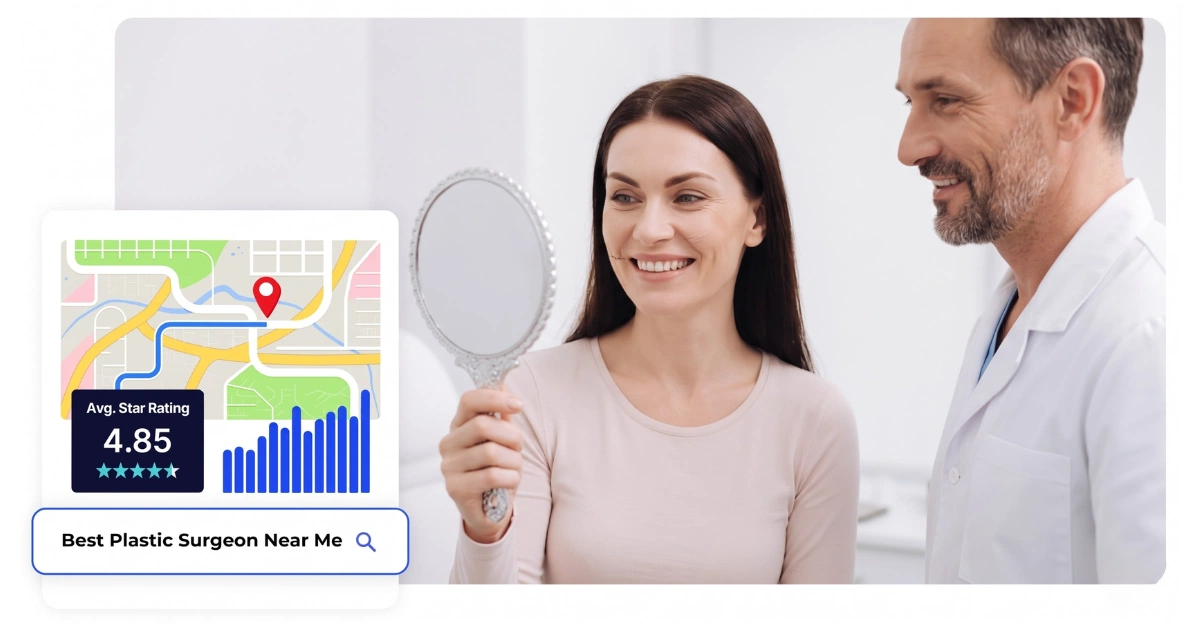
- Separate campaigns for every procedure your practice actively fills. Individual structures for rhinoplasty, breast augmentation, liposuction, facelift, tummy tuck, mommy makeover - each with its own quality score, its own landing page, and its own performance data.
- Ad copy built around what high-consideration cosmetic surgery patients need to see. Patients evaluating an elective procedure want board certification, years of specialization, and a clear path to a consultation. Our copy leads with the trust signals that convert at this level of decision.
- Full account ownership stays with your practice - always. You own the Google Ads account. Direction manages it. Every keyword, every adjustment, and every dollar spent is visible to your team at any time - and stays with your practice permanently.
A well-structured plastic surgery paid media campaign with a strong quality score pays less per click than a disorganized competitor bidding higher – every single auction. That gap, running across thousands of monthly searches in a competitive market, is what separates a paid media program that consistently generates consultation requests from one that consistently generates invoices.
We manage the complete paid media program – campaign structure, ad compliance, procedure-specific landing pages, and monthly reporting. The only metric we hold ourselves to at the end of each month is your cost per booked consultation appointment.
WHY MOST PLASTIC SURGERY PRACTICES BURN THROUGH AD BUDGETS WITHOUT FILLING CALENDARS
Rhinoplasty patients and breast augmentation patients don’t search the same way, decide on the same timeline, or convert on the same triggers. Rhinoplasty patients research for weeks. Breast augmentation patients convert faster. Mommy makeover patients arrive through multiple search paths before landing on the combined query. Treating all of these the same way, in one campaign, means none of them get an ad experience built for where they are.
Direction builds separate campaigns for each procedure you perform, with copy and landing pages that speak to how that specific patient searches and what they need to see before they book.
- ✓ plastic surgeon near me
- ✓ best plastic surgeon in [city]
- ✓ board certified plastic surgeon
- ✓ rhinoplasty surgeon near me
- ✓ nose job consultation near me
- ✓ breast augmentation surgeon near me
- ✓ tummy tuck surgeon near me
- ✓ mommy makeover near me
- ✓ liposuction near me
- ✓ Brazilian butt lift surgeon near me
- ✓ facelift surgeon near me
- ✓ eyelid surgery near me
- ✓ how much does a tummy tuck cost
- ✓ plastic surgery financing options
- ✓ plastic surgery before and after photos
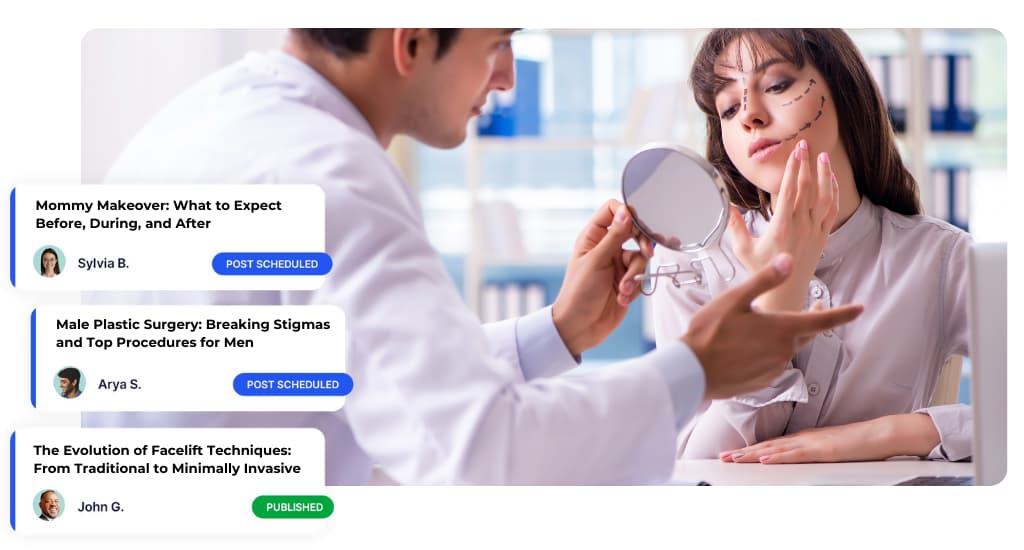
- Procedure-specific landing pages with surgeon credentials above the fold
- Mobile-first design (the majority of cosmetic surgery searches happen on phone)
- Click-to-call and form submission tracking per procedure campaign
- Consultation booking integration with your practice management software
- Headline and CTA testing to improve consultation conversion rates over time
The Consultation Is Won or Lost After the Click - Not Before It.
The majority of cosmetic surgery searches happen on mobile. A patient who clicked your rhinoplasty ad after weeks of research is one slow-loading page away from closing the tab. If that click lands on a homepage with a navigation menu and no visible path to a consultation, the appointment is gone – along with everything spent to get that click.
Direction builds a dedicated landing page for each procedure campaign – designed to load fast, open with the surgeon’s relevant credentials, and put a consultation request form or click-to-call option within the first scroll. Every submission and call traces back to the specific campaign and keyword that produced it.
What We Do
Our Plastic Digital Paid Ads Services
Google places cosmetic surgery advertising under its sensitive interest category restrictions – a classification that limits audience retargeting, prohibits certain creative executions inside the ad units, and restricts specific language in ad copy. Campaigns built without that knowledge get flagged and suspended. Direction manages plastic surgery paid advertising within those policies from the first campaign structure, so your ads keep running and your budget keeps working.
Beyond compliance, plastic surgery PPC requires category-level knowledge that general healthcare agencies don’t bring. Facial procedure patients search differently from body contouring patients. Competitive markets like Los Angeles, Miami, New York, and Dallas require tighter geographic targeting and stronger quality scores to stay efficient. We manage the full program and hold ourselves to one number: your cost per booked consultation.
Google Search Campaigns
Every procedure your practice offers gets its own search campaign with its own ad groups, bidding strategy, and keyword set. Separate structures for rhinoplasty, breast augmentation, liposuction, facelift, tummy tuck, mommy makeover, and every other procedure you want to fill - so performance data is actually useful and budget goes toward what's generating consultations.
Procedure-Specific Landing Pages
A patient who clicks 'rhinoplasty consultation [city]' expects to land on a rhinoplasty page - the surgeon's facial credentials, their approach, the path to booking. Sending that patient to a general homepage drops conversion rates significantly. Direction builds and manages a dedicated landing page for every procedure campaign, matched to the ad copy that sent the patient there.
Google Local Services Ads (LSAs)
Local Services Ads charge per lead, not per click - your practice pays only when a patient calls or contacts you directly through the ad. For plastic surgery practices in competitive metro markets, LSAs appear at the very top of results above standard paid ads, with Google's verified badge attached. Direction handles setup, lead review, and dispute management.
Ad Compliance for Cosmetic Surgery
Google prohibits before-and-after imagery inside cosmetic surgery ad creative, restricts outcome language in ad copy, and limits retargeting audiences based on prior site visits. A violation means account suspension - no visibility while ad spend continues. Direction writes compliant copy that still drives consultation requests and monitors every policy update affecting cosmetic surgery accounts.
Campaign Tracking and Revenue Attribution
Call tracking tied to individual keywords. Form submission events connected to specific ad groups. Consultation bookings traced to the exact campaign and search term that produced them. Monthly reporting in the language your front desk and practice administrator actually use - consultations generated per procedure per dollar spent. Appointments. Not impressions.
Competitive Market Analysis
In markets like Beverly Hills, Miami, and Manhattan, competitive cosmetic surgery keywords carry some of the highest CPCs in healthcare advertising. Before any campaign goes live, Direction maps what your competitors are actively spending on, which procedure categories have strong patient search volume with weaker paid coverage, and where your practice's credentials give you an advantage worth leading with.
PLASTIC SURGERY RESOURCES
Plastic Surgery Marketing Insights
The patient who books a consultation with you today typically started researching weeks or months ago. These resources cover the search strategies and content approaches that keep your practice visible throughout that process.

Karen Threlkel
My search ranking increased significantly due to their skilled approach in SEO. My practice is also experiencing an increase in patients. They are really responsive and great to work with. I’ve been working with them for over 5+ years now.
Helping Healthcare Organizations Thrive & Win Since 2016

Stephen Stearman
They got my site to rank at the top of search results for hundreds of pages in hundreds of different cities, which generated over 1,200 new patients in just the first month.

Ginger M. Sullivan
I’ve seen my search rankings soar thanks to their expert SEO strategies implemented while building my website. My practice has experienced a notable increase in new patients across all therapy types. They continue to be an invaluable partner in growing my mental health practice.
Get a free paid media proposal from plastic surgery advertising specialists
We review your current campaign structure, analyze the paid search coverage in your specific market, and identify which procedures represent the strongest paid advertising opportunity for your practice right now. The proposal is specific to your practice – not a template applied across accounts – and no commitment is required to receive it.
- Full campaign audit and review
- Competitor ad coverage analysis
- Cost-per-lead market benchmarks
- Procedure-specific campaign roadmap
- Landing page conversion review
- Multiple program and pricing options
Market leader
in SEO strategy
Voted top rated
SEO agency
5 Star rated
in excellence
accelerator for SMBs"
Real, sales-backed results,
Proven strategies.

Common Plastic Surgery PPC Q&A's
Paid search for plastic surgery raises questions that general healthcare advertising doesn’t. Patient decision cycles are longer, Google’s policies are stricter, and the procedures involved carry a level of patient consideration that changes how campaigns need to be built, managed, and measured. Here’s what plastic surgeons and their practice teams ask most often before getting started.
How quickly will paid search campaigns start generating consultation requests?
Campaigns go live within 48 hours of launch. Most practices see their first consultation requests within the first week. The first 30-60 days are when we gather performance data and refine targeting, so results compound as the campaign matures. You can see what that progression looks like in practice on our results page.
Do we own the Google Ads account, or does Direction?
You own it. Always. Direction is added as a manager, not the account owner. Every keyword, every campaign, and every dollar of spend history lives in your account and stays with your practice permanently – regardless of how long we work together. Reach out if you have questions about how account access and transitions are handled.
Can you run ads for specific procedures only, rather than the full practice?
Yes, and that’s actually how we prefer to work. If your practice wants to fill rhinoplasty and mommy makeover consultations specifically, we build campaigns around exactly those procedures. You decide which procedures to advertise based on your schedule, your revenue goals, and which patient types you want more of. Our plastic surgery digital marketing hub covers how procedure-specific strategies work across all channels.
What makes plastic surgery PPC different from general healthcare advertising?
Google classifies cosmetic surgery under its sensitive interest categories, which restricts retargeting, prohibits before-and-after imagery inside the ad units, and limits certain language in ad copy. Campaigns built without that knowledge get flagged and suspended. Plastic surgery patients also research longer and behave differently by procedure type – which changes how campaigns need to be structured to convert. Our healthcare PPC advertising page covers the full approach we take across medical specialties.
How do you track which campaigns are actually producing consultations?
We set up call tracking, form submission tracking, and consultation booking events tied to individual campaigns and ad groups. Every booked appointment connects back to the specific keyword and ad that produced it. Monthly reporting shows consultations generated per procedure – not traffic, not impressions. For a closer look at what that accountability looks like in practice, browse our client results.
What happens if our Google Ads account gets suspended?
Direction manages plastic surgery campaigns within Google’s advertising policies from the initial build, so suspension risk stays low. In the rare event Google flags an account, we handle the appeal process and work to restore visibility as fast as possible – with a clear explanation of what triggered the flag and how it gets fixed. You can learn more about our broader healthcare PPC management services and how we stay ahead of policy changes.
Do you require long-term contracts?
We require an initial 90-day commitment for plastic surgery campaigns. Cosmetic procedure advertising takes longer to reach peak performance than general healthcare because patient decision cycles are longer and quality score development takes time. After 90 days, the engagement continues month to month. Contact us to discuss program options and what the first 90 days looks like in practice.
Can campaigns target patients in specific cities or zip codes?
Yes. Geographic targeting is one of the most important levers in plastic surgery PPC. We can target by city, radius, zip code, or specific neighborhoods – and we adjust bids based on which locations in your market are actually producing consultation requests versus expensive clicks that don’t convert. If you also want to build long-term local visibility alongside your paid campaigns, our plastic surgery digital marketing page covers how both channels work together.
What is the difference between Google Search Ads and Local Services Ads for plastic surgery?
Search Ads charge per click, regardless of whether the patient contacts your practice. Local Services Ads charge per lead – you pay only when a patient calls or messages you directly through the ad. LSAs also carry a Google-verified badge and appear above standard paid ads on the results page. Direction manages both, and most plastic surgery practices benefit from running them together. Our healthcare PPC services page has more detail on how we structure multi-format paid programs.
How do you adjust campaigns around seasonal demand for cosmetic procedures?
Cosmetic surgery searches follow predictable patterns – tummy tuck and body contouring searches spike in January and again before summer, rhinoplasty searches peak in late fall when patients plan around holiday recovery time, and mommy makeover interest rises in spring. Direction builds seasonal budget and bid adjustments into every campaign calendar so your practice captures those windows without manually managing it. Our plastic surgery marketing hub covers how seasonal strategy fits into a full-year approach.
What does monthly campaign management actually include?
Keyword refinement, negative keyword updates, bid adjustments by procedure and location, ad copy testing, landing page performance review, quality score monitoring, and a monthly report showing consultations generated per procedure. Management is active – campaigns are reviewed and adjusted every week, not once a month. We also build and update procedure-specific landing pages as part of the program, which is where most of the conversion work actually happens. If your current site needs a foundation that supports high-converting paid traffic, our healthcare web design services are built exactly for that.