Plastic Surgery Website Design Services
Plastic surgery patients spend weeks researching before they contact anyone. They compare before-and-afters, weigh credentials, and return to the same sites multiple times before requesting a consultation. Direction builds plastic surgery websites that win those return visits.
We work exclusively in healthcare. Every design decision – from gallery taxonomy to procedure page depth – is built around how elective medicine patients actually decide.


Why Most Plastic Surgery Websites Don't Generate Consultations
Nobody Is Just an Expensive Brochure.
Most plastic surgery practices have websites that appear professional. The problem is professional-looking and patient-converting are two different things. Patients choosing between you and the surgeon across town aren’t reading your credentials page. They’re scanning before-and-afters for the result they want.
A site built for appearances has the right layout and the right fonts. What it doesn’t have is gallery architecture that presents results by procedure, procedure pages deep enough to rank for “rhinoplasty surgeon near me,” or a mobile consultation flow that converts before a distracted patient closes the tab.
Plastic surgery patients visit four to six websites before choosing a surgeon. The practice that answers their questions fastest gets the consultation. That outcome is determined by design decisions made during the build.


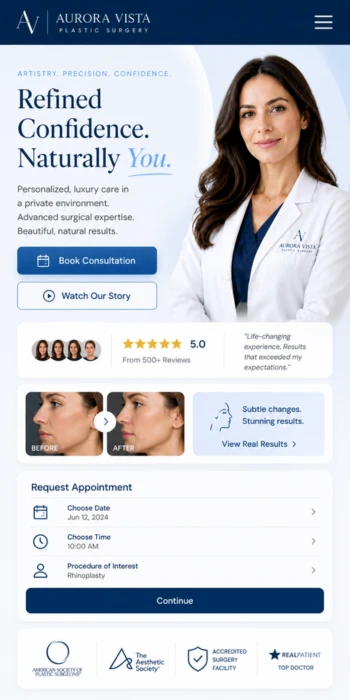
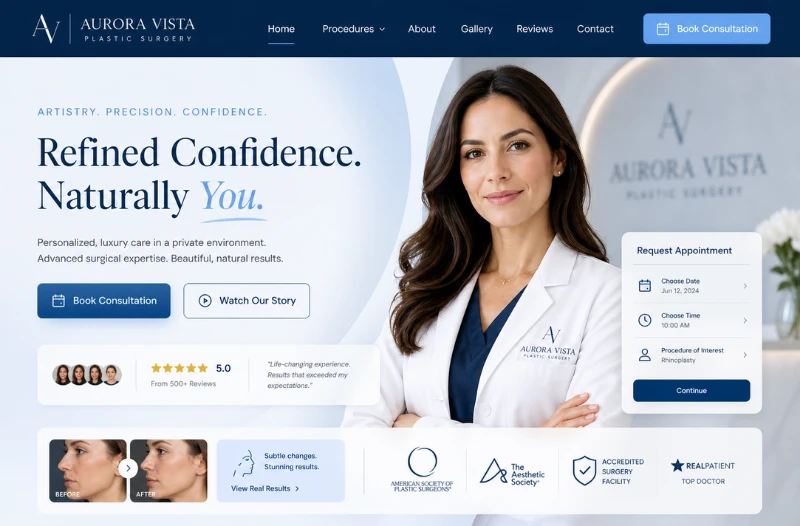



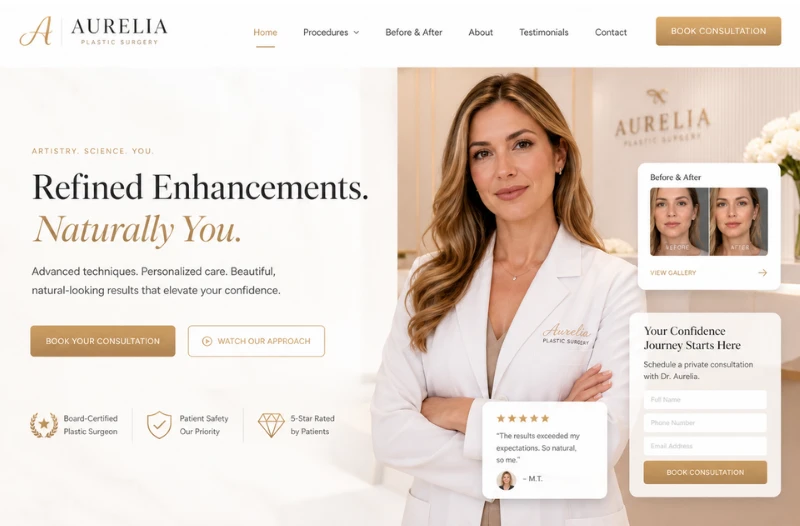
Want to preview the desktop design? Rotate your phone horizontally.
What a Plastic Surgery Website Should Actually Do for Your Practice
Direction builds plastic surgery websites around how patients actually decide. Gallery-first architecture puts before-and-afters at the front of the experience. Procedure pages go deep enough to rank for specific surgical searches and answer every pre-consultation question without requiring a phone call.
The visual design is premium. The structure underneath – page hierarchy, internal links, CTA placement – has one job. Get that patient to request a consultation before they open another tab.
What Plastic Surgery Website Design from Direction Includes
Six areas that work together to turn your website into your best-performing new patient source.
Before-and-After Gallery Architecture
Your gallery is the moment most prospective patients make up their minds. We build filterable, procedure-specific galleries optimized for mobile, compressed in WebP format for fast loading, and organized so the results most likely to build trust are the first ones patients see.
Procedure Pages Built to Rank and Close
Generic procedure descriptions don't rank and they don't close. Each procedure page gets keyword-targeted content written for competitive surgical searches, internal links to your gallery, and a consultation CTA placed where patients are ready to act - not buried below the fold.
Surgeon Credentialing and Trust Signal Integration
ABPS board certification, ASPS memberships, RealSelf review feeds, and live Google Reviews are placed where patients look during their research phase. Credentials that aren't visible at the right moment don't change the decision.
HIPAA-Compliant Infrastructure Throughout
Consultation request forms, virtual consultation flows, and before-and-after image handling are built with HIPAA compliance as the starting point. Direction builds with compliance as a foundation because a website that creates patient data liability is a liability, not an asset.
Consultation Conversion Architecture
Sticky consultation CTAs, mobile-first booking flows, and financing page design for CareCredit and Alphaeon integration. Every element sits where patients are most likely to act - based on how elective medicine patients actually move through a site, not based on what looks good in a mockup.
SEO and AI Search Visibility Built Into the Foundation
Procedure page hierarchy, internal linking, and schema markup are planned before a single word is written - not added after launch. Your site is also structured to appear in ChatGPT, Perplexity, and Google AI Overviews from day one.
Real, sales-backed results,
Proven strategies.

Common Questions About Plastic Surgery Website Design Services
What makes a plastic surgery website different from a general healthcare website?
Plastic surgery patients make elective decisions after weeks of visual research, comparing before-and-afters and returning to the same sites multiple times before reaching out to anyone. The site needs gallery architecture organized by procedure, procedure pages deep enough to rank for specific surgical searches, and a consultation pathway that converts on mobile without friction. A plastic surgery website has to earn the patient’s confidence before they pick up the phone. Our plastic surgery digital marketing hub covers every channel that supports that outcome.
Will my plastic surgery website rank on Google for procedure-specific searches?
Ranking for procedure searches is a function of how the site is built. Direction integrates SEO architecture from the start – keyword-targeted procedure pages, internal linking, and schema markup planned before the first wireframe. Combined with an ongoing SEO campaign, the site is positioned to compete for rhinoplasty, breast augmentation, and body contouring searches in your market from launch. Our plastic surgery SEO services page covers the full ranking approach in detail.
Does Direction write the procedure page content, or does my practice provide it?
Direction handles all procedure page content as part of the build. Each page is written to rank for specific surgical searches in your market and give patients the depth they need before requesting a consultation. You review and approve everything before it goes live.
Can you redesign an existing plastic surgery website instead of building from scratch?
Yes. Most plastic surgery website projects involve a redesign rather than a build from zero. We audit your current site for conversion gaps, gallery performance issues, and structural SEO problems before scoping the work. Some sites need a full rebuild. Others need targeted improvements to specific sections. We recommend based on what the data shows, not what costs more. Browse Direction’s client results to see examples across both project types.
Who owns the website - my practice or Direction?
Your practice owns the site outright – the code, the content, and the domain. No licensing fees, no lock-in clauses. If you choose to move on at any point, the site goes with you.
How does plastic surgery web design connect to Direction's SEO services?
Direction runs both services under one roof intentionally. The site architecture built during the design project is the same foundation the SEO campaign runs on. Procedure page hierarchy, URL structure, and internal linking decisions made during the build directly affect ranking performance. Starting with a site built for SEO is faster and less expensive than retrofitting a campaign onto a structure that was never built to rank. Our plastic surgery SEO page covers exactly how the two programs connect.
How do you handle before-and-after photos and HIPAA compliance for plastic surgery galleries?
Before-and-after galleries are built with HIPAA-compliant image handling and patient consent workflow included in the process. Images are compressed for performance without sacrificing quality. Patient consent documentation and image storage are part of the gallery management system we configure for your practice during the build. Our healthcare web design page covers how we handle compliance across all medical specialties we work with.
How long does a plastic surgery website build take from start to launch?
Most projects run eight to twelve weeks from signed agreement to launch, depending on procedure page volume, gallery size, and content review timelines on your end. We provide a detailed project schedule before work starts so both teams know exactly what happens and when.
Plastic Surgery Web Design Agency Serving Practices Nationally
Request a free plastic surgery website audit. We review your current site against the practices ranking above you, identify where your gallery, procedure pages, and mobile experience are costing you consultation requests, and show you what a site built to compete in your market actually looks like.
No obligation. No pressure. Just a real assessment from the only agency that works exclusively in healthcare.

Plastic Surgery Marketing Hacks