Mental Health Web Design Services
Most therapy practice websites look professional and convert almost no one. Direction builds mental health websites where every design decision — layout, copy, calls to action — is engineered around how someone in distress actually decides to reach out.
- Healthcare is the only industry we work in — no explaining why therapy seekers need warmth and safety before a contact form, not after
- SEO is built into the site from day one — not handed off to another team to retrofit onto a structure that wasn't built for it
- HIPAA-compliant infrastructure from the start — forms, tracking, and data handling that don't create a liability


A Beautiful Website Doesn't Fill a Caseload.
A Patient Acquisition System Does.
A prospective client searches “trauma therapist near me” at 10pm. They land on your site. They spend eight seconds deciding whether to reach out or close the tab. That decision — made before they’ve read a single paragraph — is worth months of income per client.
Most therapy practice websites were built to look credible. Professional headshots, a list of specialties, a contact page buried in the navigation. What they don’t have is the psychological architecture that gets someone in distress from “I found this practice” to “I’m filling out the contact form.” The visual design signals trust in two seconds or it doesn’t. The content answers the questions running through their head or it doesn’t. The contact form feels safe and low-stakes or they close the tab.
76% of mental health practice websites that look professional rank nowhere in search results. Of those that do rank, most convert at a fraction of what they should because the site was designed for appearances, not client acquisition. That gap is where practices leave the most revenue sitting.
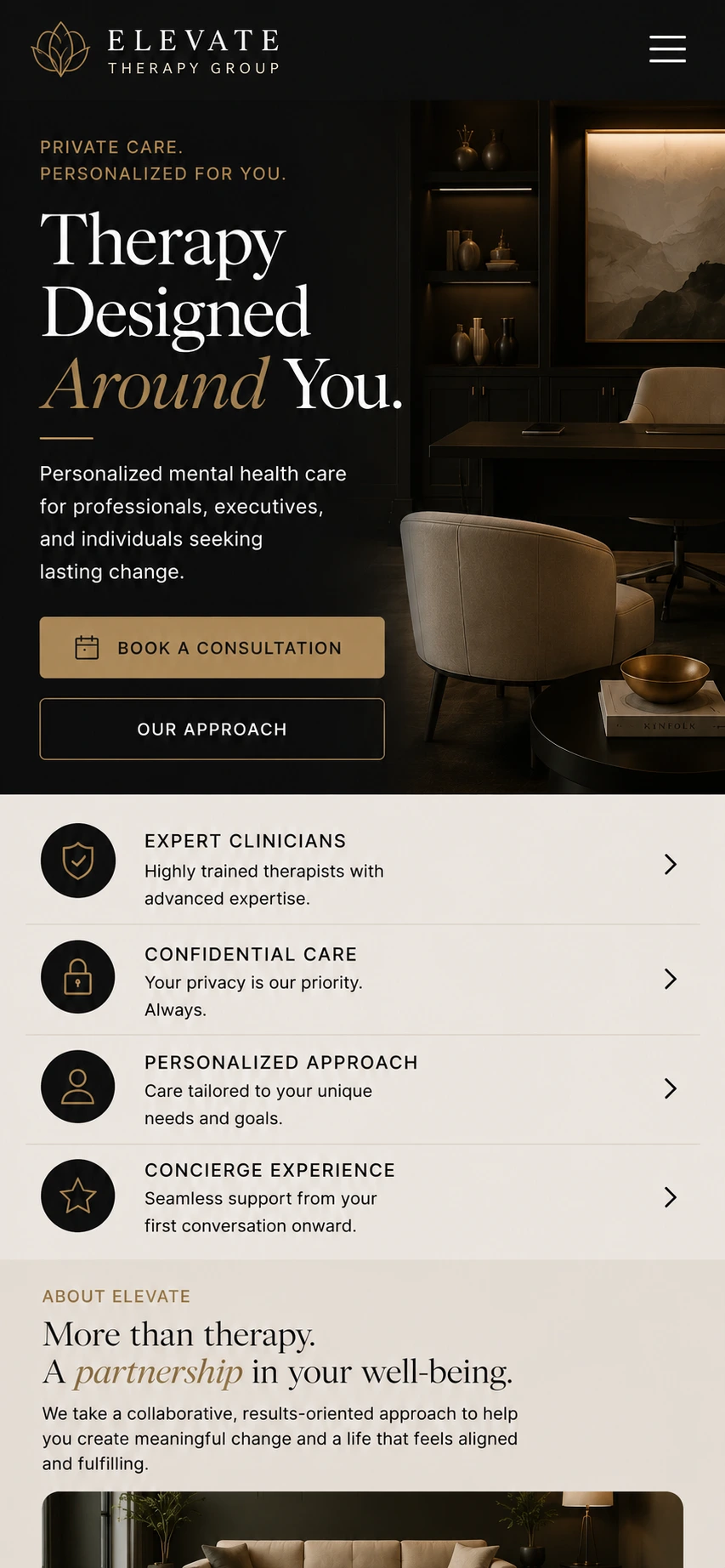
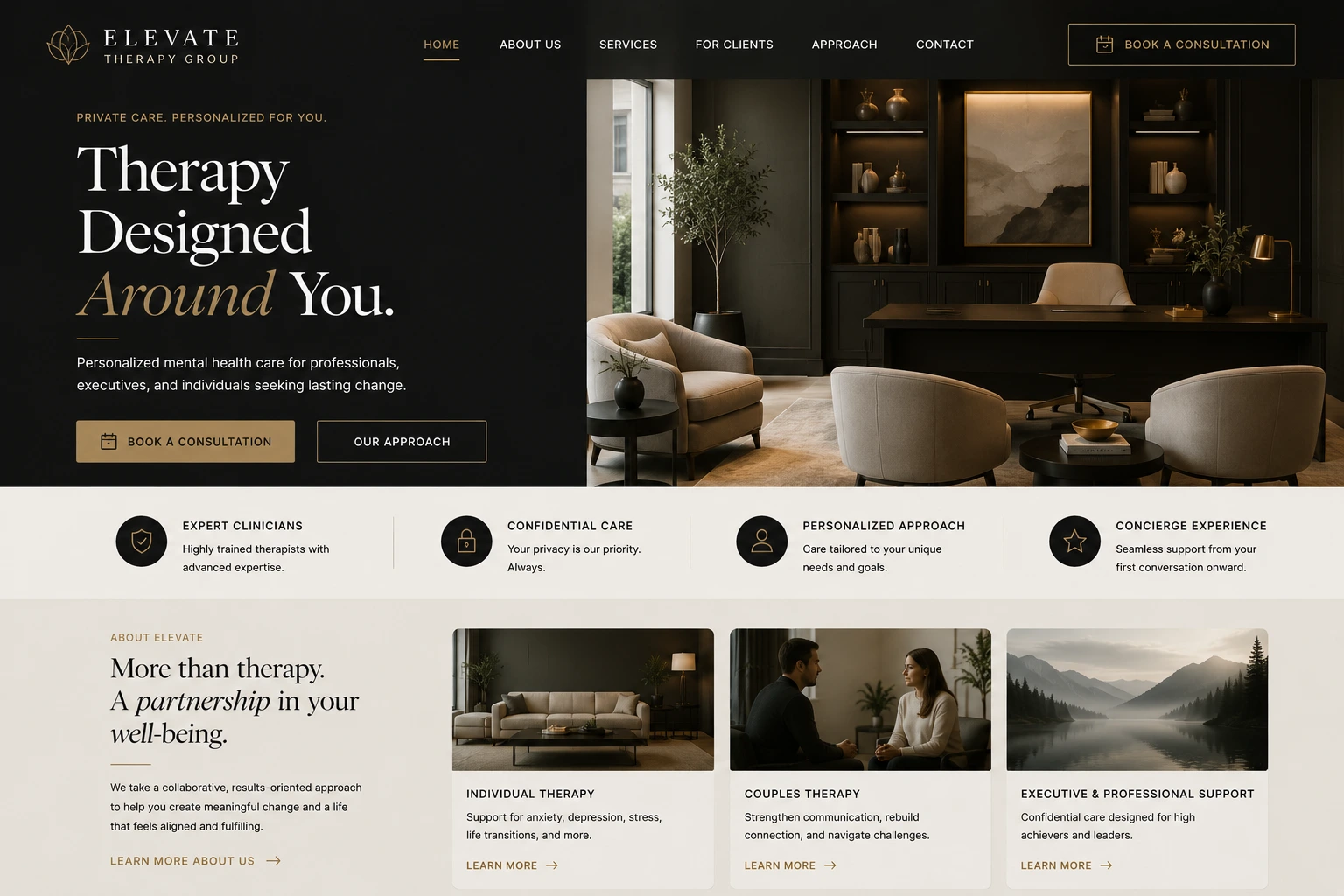
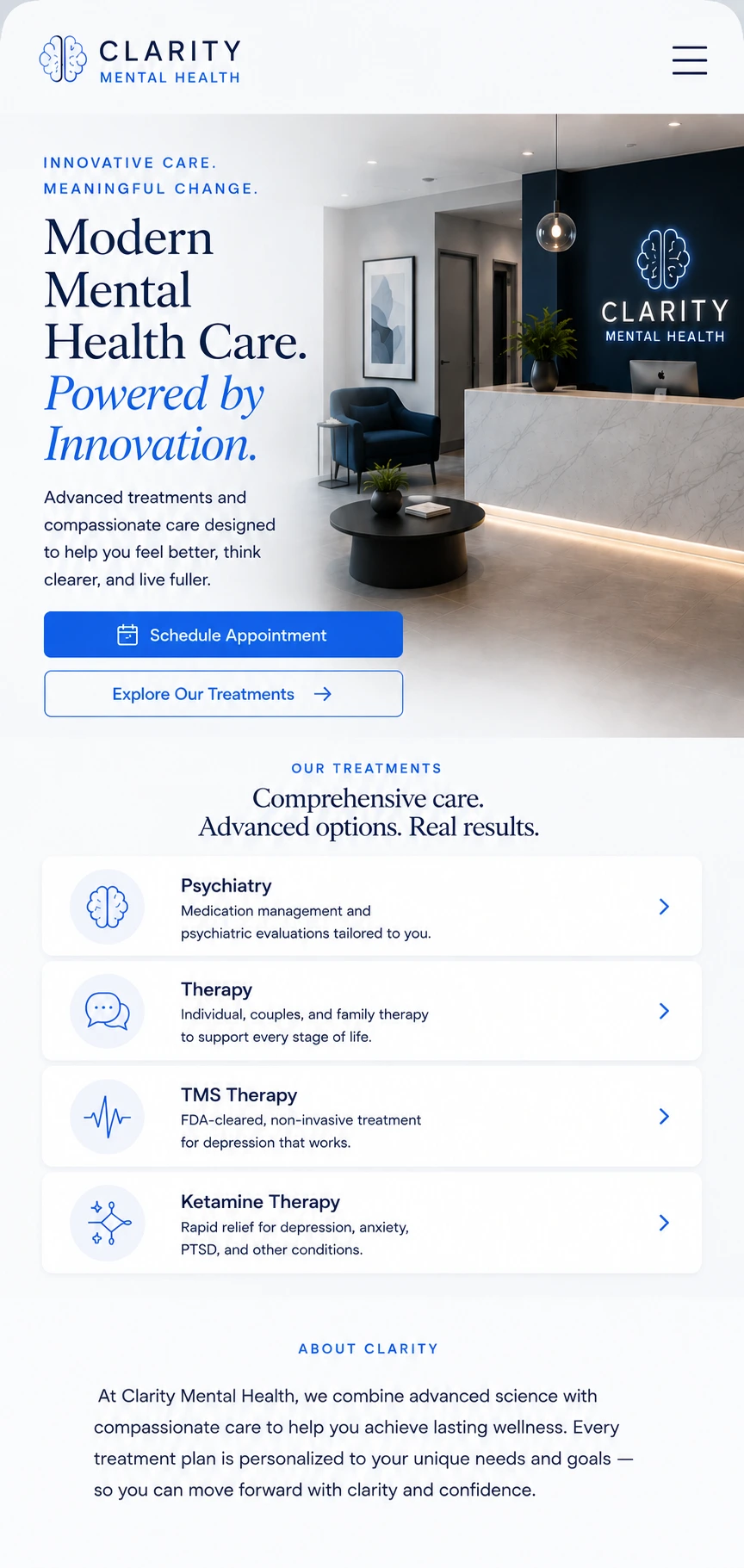
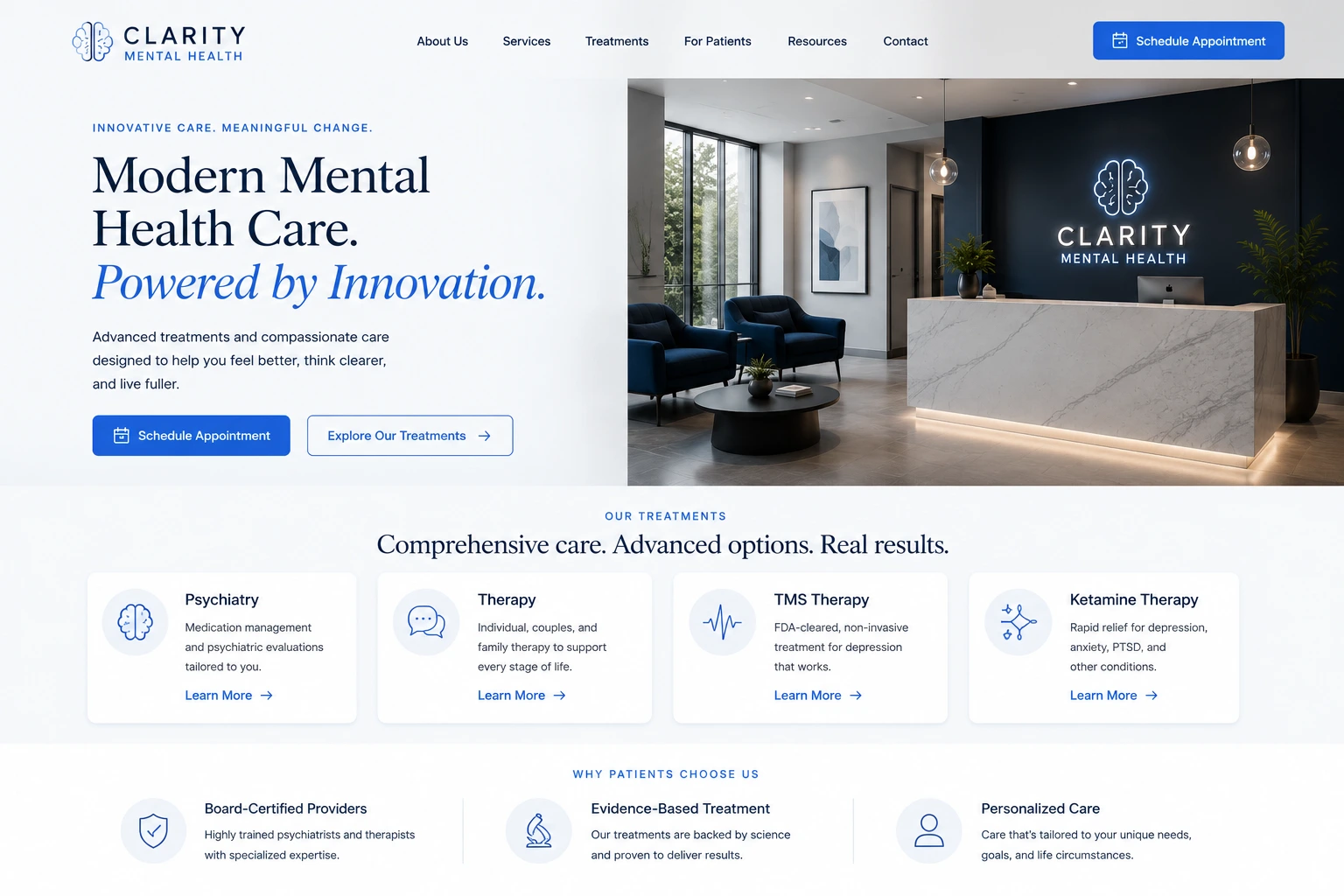
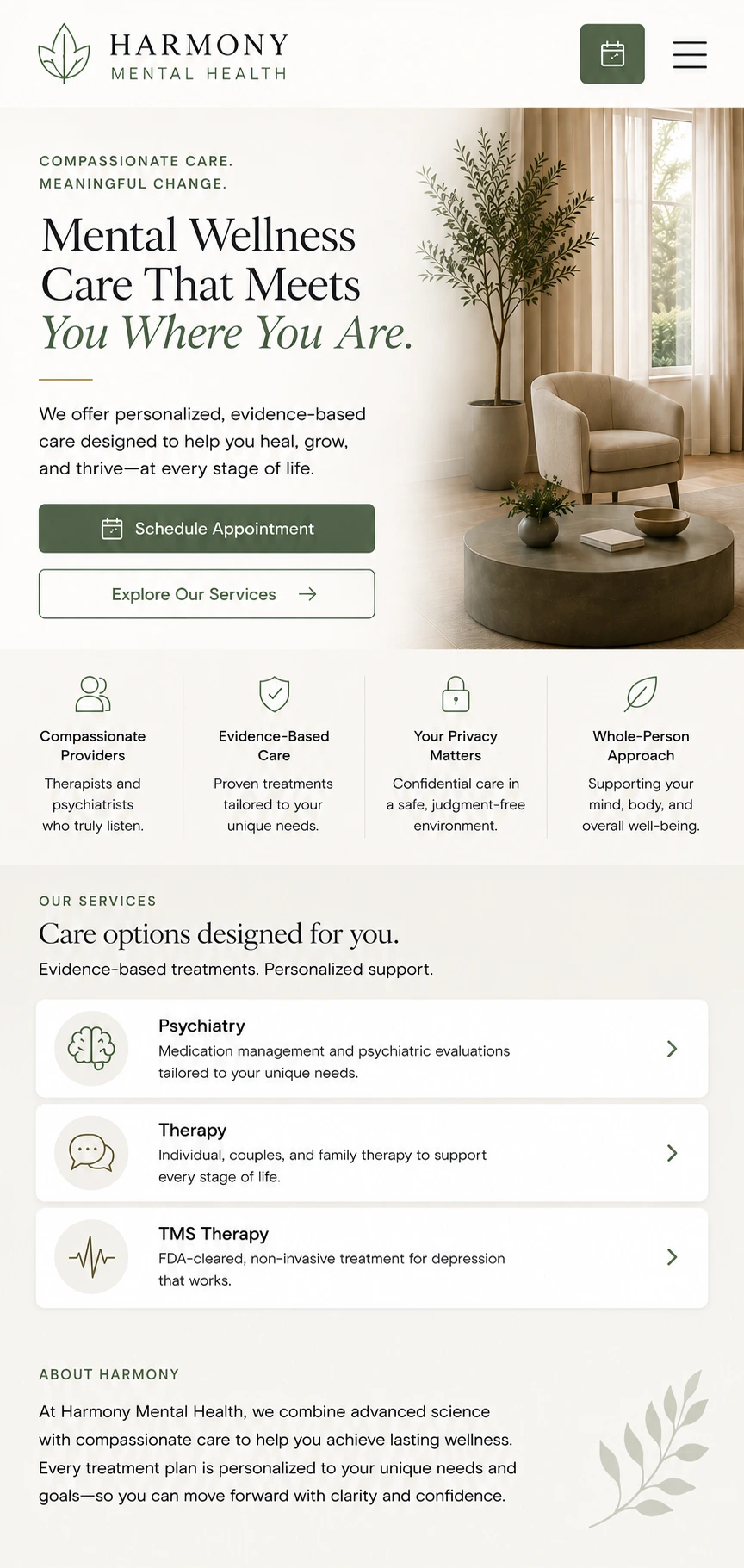
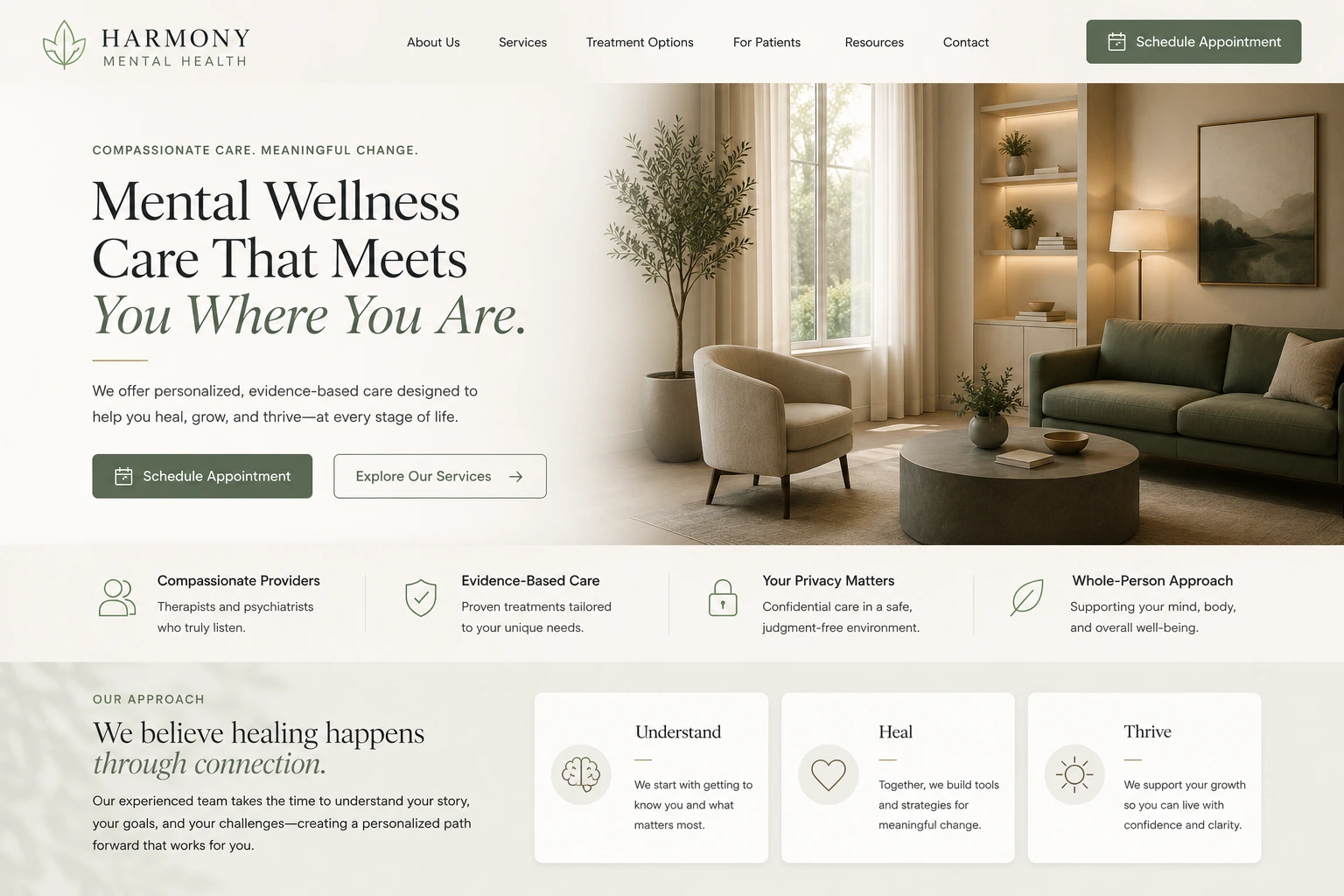
The person landing on your site is not shopping.
They're deciding whether to ask for help.
Someone searching for a therapist moves carefully. They read clinician bios before anything else, look for signals they’ll feel understood before they check credentials, and abandon contact forms that feel clinical or rushed. A homepage built for appearances loses them in eight seconds.
General web agencies don’t know this, so they apply retail conversion psychology to a context where it backfires. Direction builds with that prospective client in mind from the first wireframe — design that earns trust fast, content that answers the questions running through their head, and a contact experience that makes reaching out feel safe.

The most common conversion problem we find in therapy website audits:
A contact form that asks for too much information before the prospective client has decided to trust you. One field — or a simple “request a free consultation” with name and email — converts significantly better than a six-field intake form on a homepage.
Six areas that work together to turn your website into your best-performing new client source.
Conversion-first design architecture
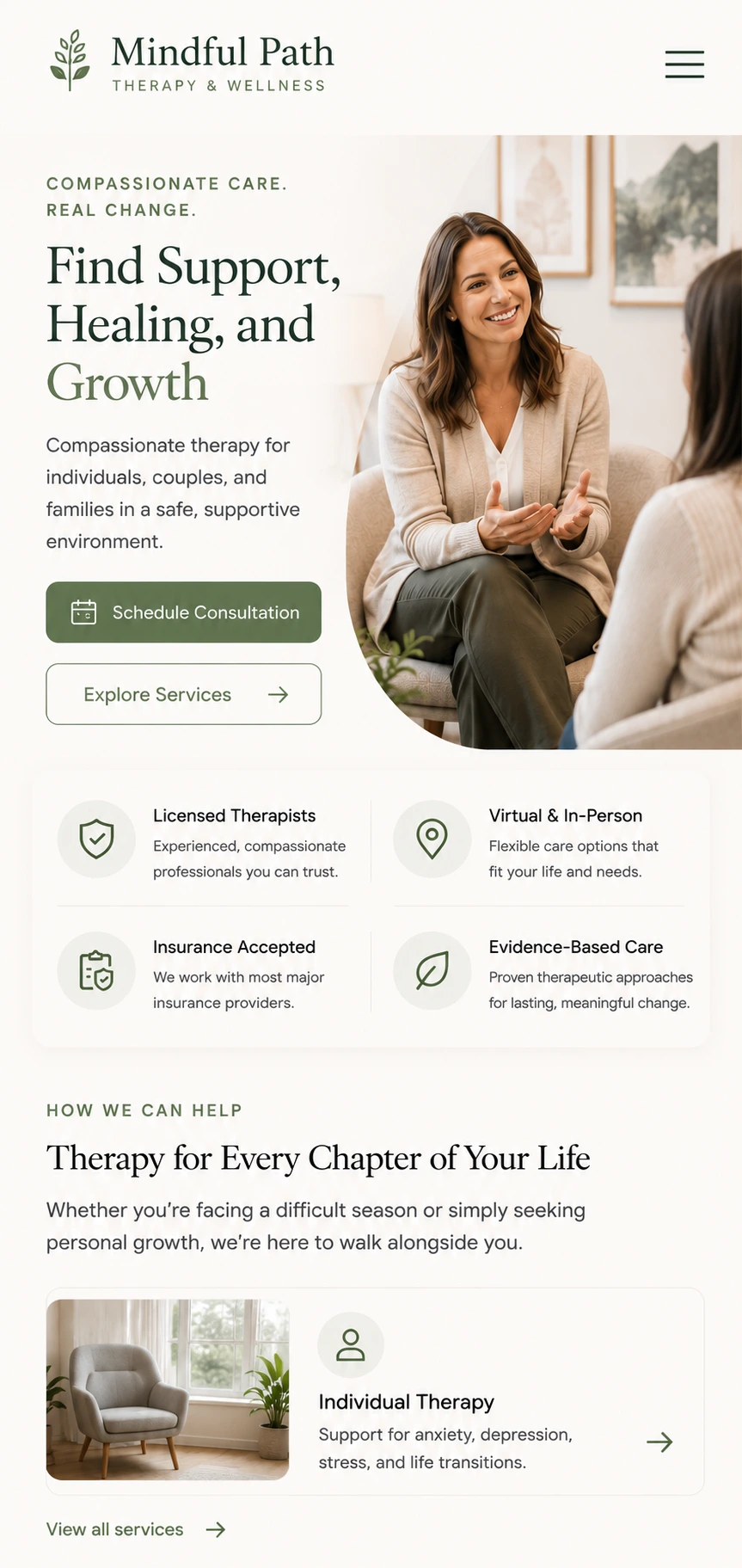
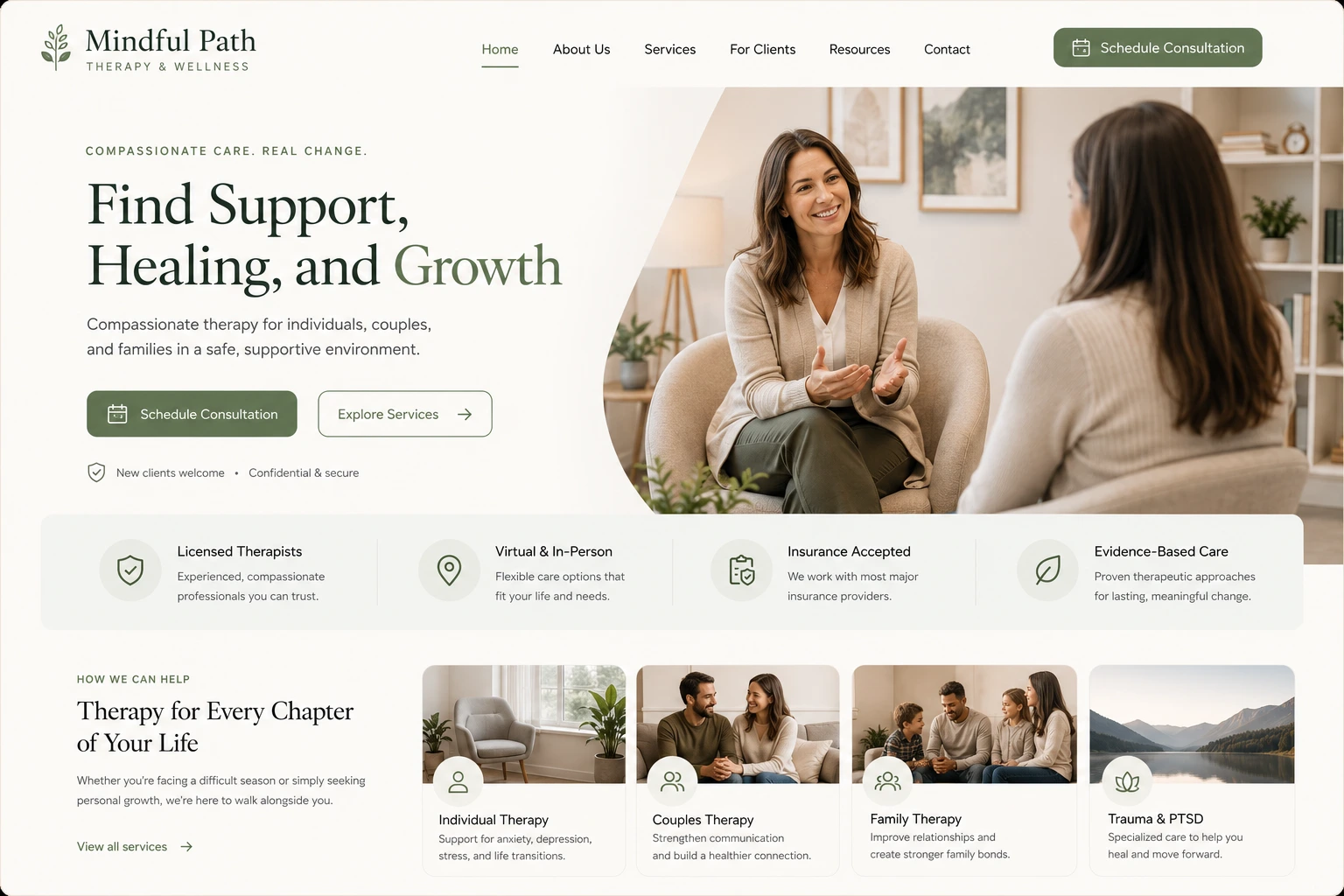
Every page has a job. The homepage builds trust and answers the visitor's first question before they scroll. Specialty pages speak directly to the person searching for that specific type of help. The contact page removes every point of friction between a visitor and their first inquiry. We design with that outcome in mind from the first mockup.
SEO built into the structure from day one
Most web firms build the site first, then hand it off to an SEO team trying to retrofit optimization onto a structure that wasn't built for it — losing months of ranking time. Direction integrates SEO from the start: keyword-targeted page hierarchy, internal linking, schema markup for therapy specialties, and site speed that satisfies Google's Core Web Vitals. Your site doesn't have to choose between looking good and ranking well.
HIPAA-compliant infrastructure
Mental health websites collect sensitive information — appointment requests, contact forms, sometimes intake questionnaires. That data has legal requirements attached to it. HIPAA-compliant form infrastructure, SSL certificates, encrypted data handling, and advertising compliance are built in from the start. A website that creates a liability isn't an asset.
Trust signal and patient experience design
The practices that convert at the highest rates aren't always the most credentialed — they're the ones that communicate warmth and safety immediately. We integrate the signals that move prospective clients: real clinician photos and video introductions, verified review feeds, financing and insurance information placed where cost-anxious visitors are most likely to close, and specialty content written to make someone in distress feel understood.
Mobile-first performance
65% of mental health searches happen on phones, often late at night when someone has finally worked up the courage to look for help. A site that loads in five seconds on mobile, has a contact form that's hard to tap, or buries the clinician bios behind three clicks loses those clients before they ever read a word. We build mobile-first, with load times under three seconds and layouts tested on real devices.
Ongoing support and maintenance
The most consistent complaint practice owners have about their current agency: changes take weeks, every update gets invoiced separately, and nobody picks up the phone. Direction operates differently — updates are handled fast, and you have direct access to your team. Adding a new clinician, updating insurance information, launching a new specialty page — these happen on your timeline, not a ticket queue's.
Real, sales-backed results,
Proven strategies.

What Practice Owners Ask Before Getting Started.
What makes a mental health website different from a general healthcare website?
The prospective client’s psychology is fundamentally different. Someone looking for a dentist or a specialist makes a relatively practical decision. Someone looking for a therapist is making a highly personal, often vulnerable decision — and the website has to earn their trust before they’ll take a single step toward reaching out. That means warmer photography, copy written around what they’re feeling rather than what you offer, contact experiences that feel low-stakes, and clinician pages that communicate personality and approach alongside credentials. A general healthcare template doesn’t account for any of this.
Will my new website rank on Google?
Yes, if SEO is built into the build — which it is for every site Direction builds. We structure the page hierarchy around the specialty and location terms your prospective clients search, integrate schema markup specific to mental health practices, and build internal linking architecture that distributes authority across your specialty and service pages. For practices that want to accelerate ranking growth, we also offer ongoing SEO retainers that work alongside the site. The two are designed to reinforce each other.
Do you build websites for group practices and multi-location behavioral health organizations?
Yes. Group practice websites require a different architecture than solo practitioner sites — individual clinician pages with specialty and modality depth, location pages for each office, and an organizational structure that ranks for both the practice brand and the specific clinicians people search for by name or specialty. Multi-location organizations get a build strategy that scales with expansion rather than requiring a full rebuild when new offices open.
Do I own the website when it's built?
Yes. You own the domain, the hosting, and every page we build. Direction doesn’t hold websites hostage on proprietary platforms that make switching costly. If you ever choose to work with a different vendor, you take everything with you. That’s how it should work.
Can you redesign my existing website rather than build from scratch?
Yes. Redesigns are common and often make more sense than starting over, especially for practices with existing rankings they want to protect. We audit the current site first — what’s ranking, what’s converting, what’s broken — then scope the redesign around those findings. Sometimes that’s a full rebuild. Often it’s targeted structural and content changes that produce most of the conversion improvement at a fraction of the cost.
How does web design work alongside SEO and PPC?
The website is the foundation everything else builds on. SEO drives organic traffic to it. PPC drives paid traffic to specialty landing pages on it. If the site doesn’t convert, neither channel produces the results it should — you’re paying for traffic that leaves without reaching out. Building or rebuilding the website first, then layering in SEO and PPC on top of a converting foundation, produces significantly better results than the reverse. We’ll map out the right sequence for your practice before you sign anything.
See Exactly Where Our Current Site is Losing Clients
We’ll review your current website and show you which pages have the wrong conversion architecture, where mobile experience is costing you inquiries, and what a rebuilt site would realistically produce for your practice and market. No obligation.

Mental Health Marketing Hacks
Smart. Effective. Targeted. Direction.com delivers mental health digital marketing solutions that work for your practice. Start reaching patients before your competition does.