Who this full-funnel marketing strategy is for
If you’re here to figure out how to grow your practice, this isn’t for you. If you came looking for the one channel that fixes everything, you’re also in the wrong place.
Growth rents you net-new customers. Spend stops, they stop. Scaling means the pipeline keeps producing on its own. You ease off the spend whenever you choose, and as each channel gets optimized, you get more customers in the door for less money. This one’s for the practices ready for the second kind.
You’ll see the exact playbook we run for practices actively scaling.
If you’re under $2M in annual revenue, this won’t help you yet. Start with SEO. Ten-plus years of our campaign data says it’s the best first place to put your money.
If you’re above $2M ARR and ready to put at least $25k a month into a full-funnel campaign, let’s get started.
Your Current Marketing Situation
It’s a Tuesday night. A patient searches Google, finds you at the top of the results, clicks into your site, reads a page or two, checks your reviews, then hears the baby start crying and closes the tab without booking a thing.
Your agency points to the data: “Look, you’re ranking, you’re getting clicks, people are staying on the site for a long time. We’re doing great.”
Most business owners agree. So they buy more of it, pouring more budget into SEO to win more of those same clicks.
That visit cost you money to earn, and it produced nothing.
The visit was never the problem.
Why a single-channel bet loses the customers it attracts
Say your healthcare SEO campaign is working. Returns compound as your rankings hold, and a year in you’re seeing 10X+ on your SEO spend.
For easy math, say one in 100 visitors becomes a patient. At 2,000 visits a month, that’s 20 new patients.
So the logic looks obvious: “I’m spending $3,000 a month for 20 patients. Double the spend, double the patients.”
What about the other 1,980 visitors? You just going to forget about them?
That’s the question single-channel marketing never answers. Here’s the sequence I watch play out:
- You rank. Organic traffic climbs and the monthly report looks fantastic.
- Patients find you, read a page or two, and check your reviews.
- Most of them aren’t ready to book that day, so they leave.
- With no other marketing campaigns running, they forget about you.
- Three weeks later they search again and book whoever stayed in front of them, which is likely the other competitor tab they had open while researching.
SEO starts the buying journey. Staying on-top of visitors until they’re ready to book requires more than just SEO.
The 95% of customers you keep losing on the first visit
How often do you make an instant purchase decision? I’ve bought plenty of things days, weeks, even months after I first realized I wanted them.
At any moment, only about 5% of your market is ready to act. Which means a full 95%, the majority of your website visitors, aren’t warmed up enough yet.
A marketing scientist named John Dawes calls it the Ehrenberg-Bass 95:5 rule, and it changes how you read every marketing report from here.
A visitor who lands and leaves is behaving normally. They’ll need you down the line, so your job is to stay in their memory until then.
Patients take their time. Tebra’s 2025 Patient Perspectives report found 79% of respondents read reviews before choosing a provider. Another 56% started their search on Google.
They compare, opening your competitor’s page right alongside yours. One visit rarely settles it.
I call it the single-channel bet. A business funds one channel, usually SEO, social media, or paid search, then hopes that single channel converts the visitor from first click to customer. Does it happen? Absolutely. Just, unreliably.
The 6-Tier Marketing Campaign
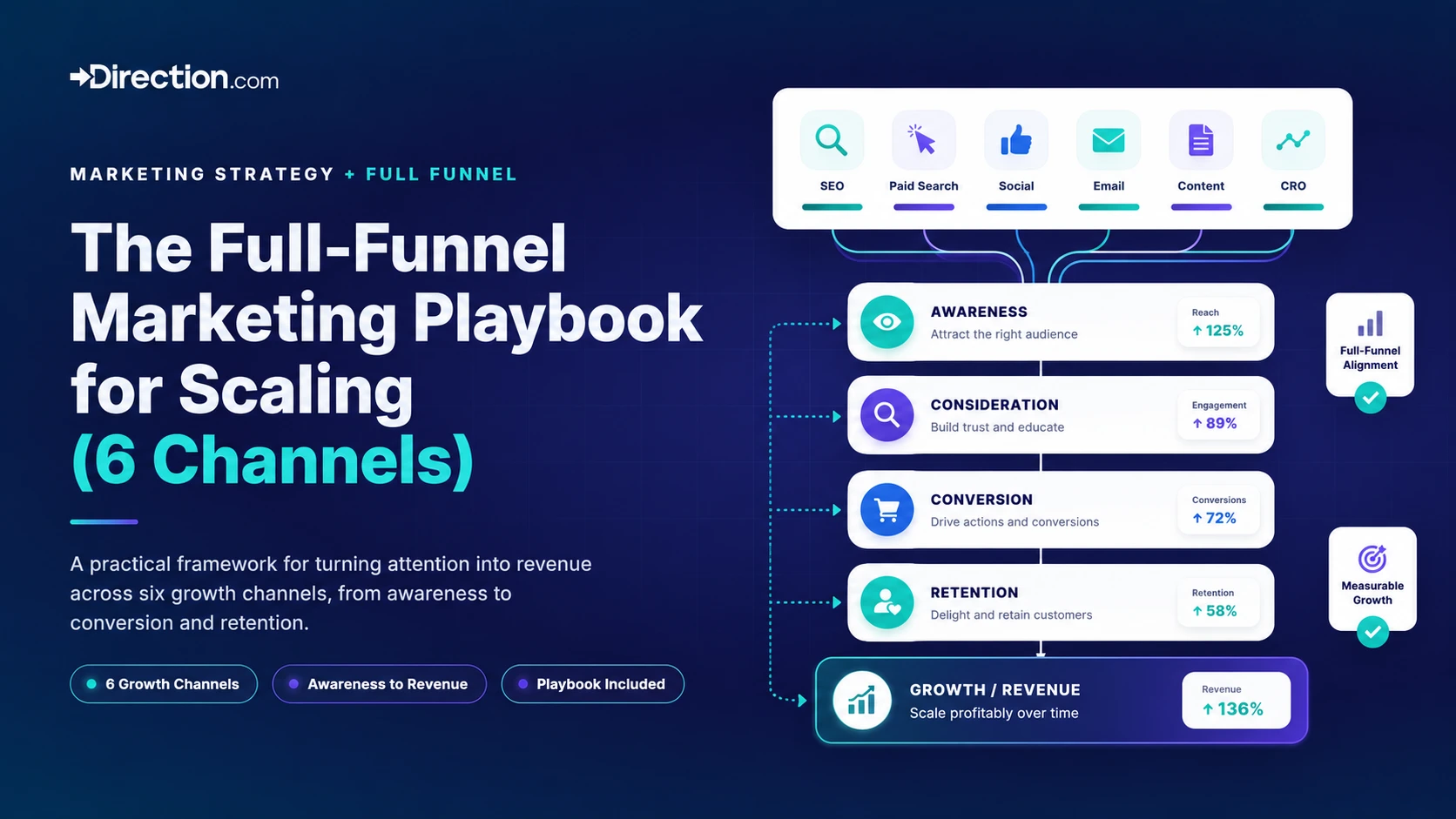
The full playbook runs six channels. Each does a different job, and together they cover the whole buying journey.
Some bring in people who are ready to book today, and the rest keep you in front of everyone who isn’t there yet.
Ruler’s 2026 data below shows the difference in channel performance.
| Channel | Conversion rate | Read |
|---|---|---|
| AI referral | 5.8% | Highest intent in Ruler's 2026 channel data, with lower volume |
| Paid search | 5.4% | Highest mature paid channel in Ruler's data |
| Organic search | 4.9% | Tied with email, slightly ahead of referral |
| 4.9% | Strong where the audience already knows the brand | |
| Referral | 4.8% | Strong trust signal from third-party sources |
| Direct | 4.7% | Often includes branded traffic and dark social |
| Organic social | 2.23% | More awareness than direct lead capture |
| Paid social | 2.11% | Lowest major channel in Ruler's data |
1. SEO, Content, And Digital PR
Bring in the people already searching for you (high-intent)
SEO captures people who are already naming their problem, comparing answers, or choosing a provider. These are the highest-intent moments in the journey, and it’s why every campaign we build starts here.
Paid search converts at a similar rate per session, but you pay for every click and fight the auction. Email and referral convert well, though only once trust already exists. Social isn’t a reliable lead generation channel on its own.
Then there’s the return. In typically less than a year, SEO doesn’t just convert well, it pays back more than any other channel.
It’s why every full-funnel campaign we build starts with SEO.
| Channel | B2B ROI | Average time to return |
|---|---|---|
| SEO | 748% |
1 to 3 years |
| Email Marketing | 261% |
About 4 years |
| LinkedIn Organic | 192% |
6 months to 1.5 years |
| SEM/PPC | 36% |
2 to 5 weeks |
SEO results take time. Use your own campaign costs and booked-patient revenue to track when the campaign pays for itself.
2. Retargeting & Remarketing
Get back in front of the people who left
Retargeting solves the exact problem SEO creates. Someone visited, you have a signal, and now you can show that visitor your ads as they move around the web and their apps.
The mechanism is older than the internet. People reach for names they recognize.
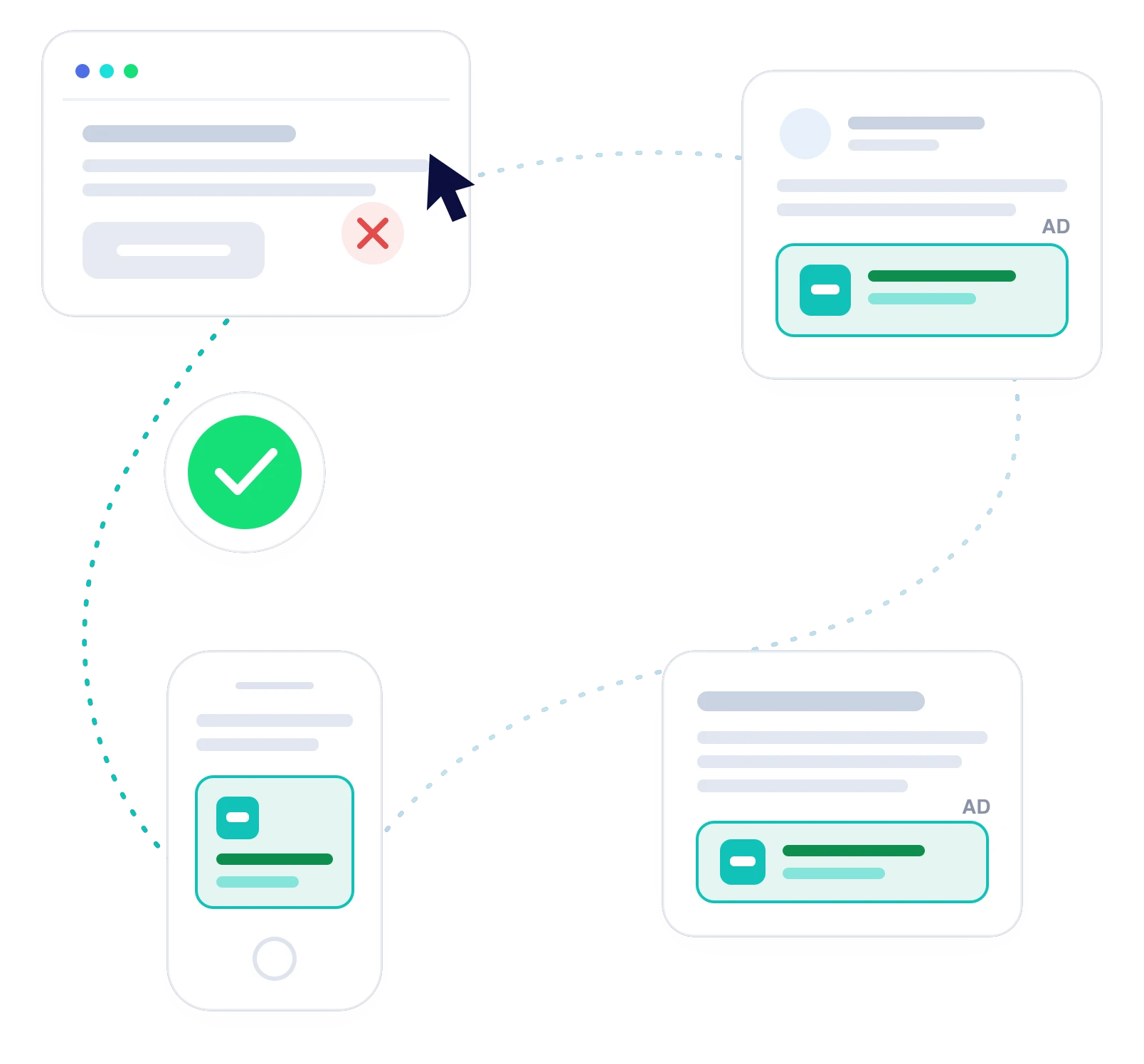
The brand that gets remembered is the brand that gets chosen. Retargeting is how you stay the remembered one.
Check these stats out:
- Bring a visitor back through retargeting and they convert about 70% better than someone seeing you for the first time.
- As much as a 104% jump in branded search, because the people who saw your ads start typing your name into Google.
- Pair retargeting with cold awareness ads and conversion rates climb around 28% over awareness alone.
Retargeting should be run across display and social. The patient who read your implant page on Tuesday sees a patient story on Thursday, then a review screenshot the next week. You already did the expensive part, getting them to you the first time. Every touchpoint after that costs less and less.
3. Paid Search (PPC)
Catch the customer the moment intent shows up
Some patients wake up with a problem and search with their wallet open. That’s the 5% who are in-market right now, and paid search is how you meet them at that moment.
Organic rankings take some time to earn. A paid search campaign shows up today, above the map pack, for the high-intent terms that signal a patient ready to call. You pay for the click, and the patient who clicks is often closer to booking than any other visitor you’ll get.
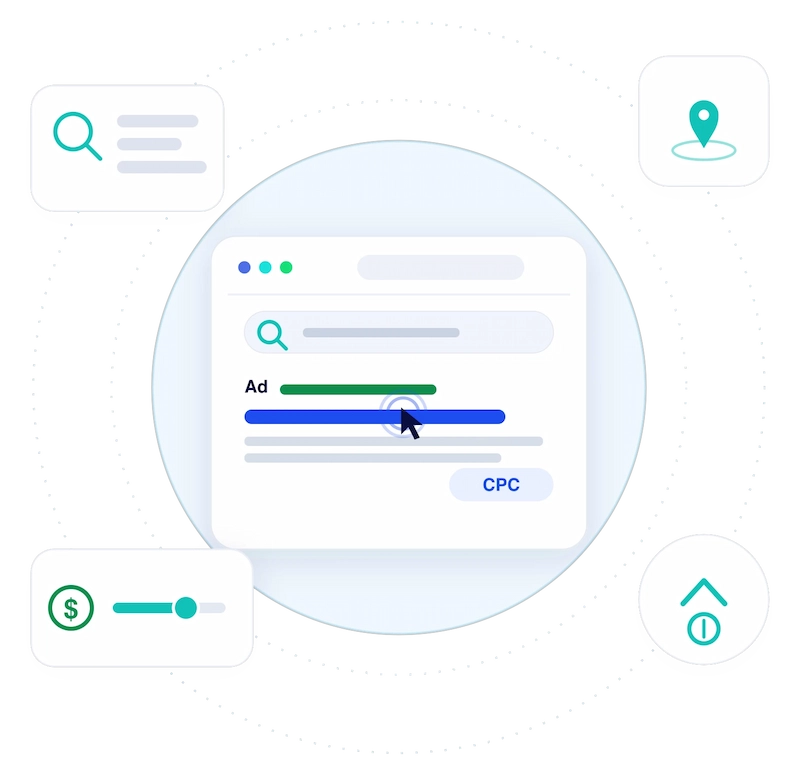
Funding both PPC and SEO means you own more of the search page real estate, significantly increasing your chances of a click. Especially if you’re a local provider showing up with a paid ad, in the top three of local map results, and then below it in organic results.
PPC form-lead rates rose after SEO began, per a Decorating Den Interiors case study. Track booked visits and costs before you decide how to fund each channel.
4. Social Media Advertising
Keep your name in the feed between searches
Patients aren’t thinking about your practice every time they pick up a phone. Social ads keep you in the rotation during the long stretches when nobody’s actively looking.
Paid social does two jobs at once. You reach new patients in your service area who match your best-fit profile, and you retarget the warm ones who already visited. The same patient you first met through SEO now sees you on Instagram while waiting in the school pickup line.
Social ads rarely book a patient on the spot, and they aren’t built to. Their job is the brand familiarity that makes every other channel convert better. By the time that patient is ready to search again, your name is already the one they know.
5. Email Marketing
Turn one visit into a months-long relationship
Capture an email and the math changes completely. You stop renting attention and start owning a direct line to a patient who showed interest.
The return is hard to argue with. Litmus State of Email data puts the average return at $36 for every $1 spent, higher than any other channel they measure. A patient who isn’t ready in May reads your monthly email and books in June, once they start realizing the tooth pain is getting worse.
Email is also where the other four channels pay off twice. SEO and ads bring the visitor, a simple opt-in captures the address, and email keeps the relationship warm for months.
6. Paid Ads in AI answers
ChatGPT PPC campaigns
With 40,000,000+ users turning to ChatGPT daily for their health questions, you simply can’t ignore this channel.
Patients ask ChatGPT and Google’s AI the questions they used to type into Google. OpenAI started showing ads inside ChatGPT in February 2026, then opened a self-serve ads platform later in May with click bidding and $25/day minimum spend.
Although, OpenAI has been deliberate about who it admits, and ad analysts put regulated fields like healthcare in the wait-and-see column for now. So the ChatGPT buy is one to watch this year while the rules for health settle.
The part you can fund today runs through Google. Google places ads inside its AI Mode and AI Overviews, the answer features that sit on top of regular search. Your existing search campaigns already feed them, so a slice of this channel is live for you right now.
Gemini stays ad-free inside the app, Perplexity pulled its ads entirely in early 2026, and Claude stays ad-free by policy. Getting found in LLMs is part paid and part earned. The paid side grows as the platforms open to regulated categories. The earned side is the authority work that helps customers find you in AI answers, the same work that wins organic search rankings (again, why SEO is so fundamental to all of this).
We watch which AI answers name our clients the same way we watch the local pack. It’s early and the data’s messy, and the brands building authority now are the ones those answers will reach for later.
What happens when all six channels run together
Now the budget question answers itself. Each channel covers a moment the others miss. Your potential customer meets you again and again, on whatever platform they’re using that day.
- 45% higher ROI for full-funnel campaigns versus single-stage ones
- 7% lift in offline sales from the same full-funnel approach
- $36 average return per $1 of email spend
Those first two figures come from a Google-commissioned Nielsen meta-analysis of more than 1,300 campaigns across 20-plus brands. Campaigns that ran across the whole funnel beat single-channel campaigns in every category.
The compounding effect comes from the channels feeding each other. Social and SEO build the familiarity, retargeting and email keep it warm, and paid search closes the patient the day intent shows up.
AI answers now run across all of it, naming you while patients research. Drop one channel and you lose the coverage it was providing.
What a fully funded campaign actually takes
Running all six channels as one campaign asks more of an organization than running any single one well. You’ll want a five-figure monthly media budget and enough patient volume to put that spend to work. Multi-location groups, scaling concierge practices, and behavioral health networks usually clear that bar.
The harder requirement is operational. Six channels only compound effectively when one team runs them on a shared report, so the SEO, the paid media, the email, and the rest inform each other instead of being jumbled, mish-mashed data. Split that across three vendors and you get six channels running, but they aren’t a single cohesive funnel.
It also takes time to setup, test, optimize, etc. But once it’s up and running, oh boy is it fun to watch the results come in.
Where to start if you're ready to fund the whole funnel
Funding the whole funnel is a real commitment, and it isn’t the right move for every company.
The brands it works for tend to share a few traits. They have the patient volume to feed six channels, the margin to wait out the slower ones, and the patience to let the compounding happen.
If that sounds like where you are, a discovery call is the next step. It’s a short conversation to see whether your goals and our approach actually fits, before anyone talks scope.
Every channel in this playbook runs inside our healthcare marketing agency program for practices that want one team on all six.
For a healthcare-specific version of this playbook, read our healthcare marketing strategies that work.