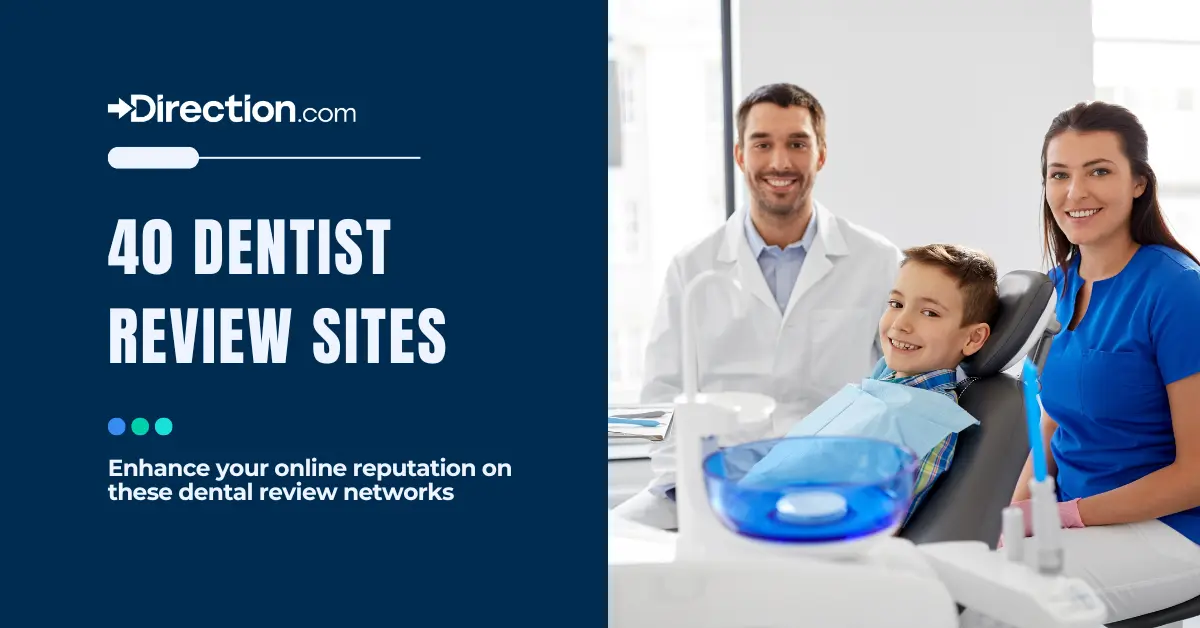
Not all review sites are equal — and dental practices that treat them as equal waste time building profiles that don’t drive patient acquisition or search visibility. This guide covers the best review sites for dental practices, ranked by actual impact, with strategic guidance on where to focus your effort first and which platforms to claim but not obsess over.
Why Review Sites Matter for Dental Practices
Nearly 98% of consumers research healthcare providers online before booking an appointment. For dental practices, online reviews influence two separate outcomes: local search rankings (primarily through Google) and direct patient conversion (across multiple platforms where patients compare providers before choosing one).
The critical distinction: Google reviews drive search ranking. Healthcare directory reviews drive direct discovery and conversion on those platforms. Both matter — but they’re not interchangeable, and the effort required to build meaningful presence differs significantly across platforms.
Your review site strategy should be built around this reality: prioritize the platforms that drive ranking and patient acquisition, claim and maintain the ones that appear in branded searches, and don’t chase platforms that don’t reach your patient population. A complete dental marketing strategy treats review management as a core operational function, not an afterthought.
Tier 1: Must-Have Review Platforms for Every Dental Practice
These platforms directly influence patient acquisition and local search visibility. Every dental practice should have fully optimized, actively managed profiles here.
1. Google Business Profile
Google reviews are the highest-priority review asset for any dental practice. They directly influence Google local search rankings and Local Pack placement — which determines how visible your practice is when potential patients search “dentist near me” or “[service] dentist [city].” A practice with strong, recent Google reviews consistently outranks one with a better website but a thin review profile.
Google holds approximately 57% of global review share and is the first platform most patients check when evaluating a new dental provider. Your Google review count, average rating, and recency all affect both how you rank and whether a patient calls after finding you.
Set a target Google rating and calculate how many five-star reviews you need to reach it.
Priority action: Build a systematic post-visit review request process that generates consistent new Google reviews. Volume and recency both matter. See our complete guide on how dental practices get more Google reviews →
2. Healthgrades
Healthgrades is the primary dedicated healthcare review platform in the U.S., with over 100 million users and profiles on more than 3 million healthcare providers. It ranks prominently in search results for provider name queries and dental specialty searches. For many dental practices, a patient’s first direct research stop after Google is Healthgrades.
Claim and fully complete your Healthgrades profile: credentials, specialties, accepted insurance, office photos, and complete contact information. Monitor reviews and respond professionally — using the same HIPAA-compliant framework as Google (never confirm patient status or reference clinical details publicly).
3. Zocdoc
Zocdoc combines appointment booking with reviews — making it uniquely high-conversion among review platforms. Patients who find your Zocdoc profile can book immediately, which shortens the patient acquisition funnel significantly compared to platforms where discovery and booking happen in separate steps.
Zocdoc reviews appear in search results for dentist name and specialty searches and are weighted heavily by patients evaluating providers. Practices with complete Zocdoc profiles, current availability, and active review responses consistently outperform those treating Zocdoc as just another directory.
4. Yelp
Yelp is more relevant for dental practices than for most other healthcare specialties. Dental searches on Yelp are high-intent, and Yelp profiles appear in Apple Maps search results — which matters as mobile dental searches increasingly happen through Apple’s ecosystem.
Important Yelp-specific caveat: Yelp actively filters reviews it suspects were solicited. Directly asking patients to leave Yelp reviews frequently results in those reviews being filtered into a “not recommended” section that doesn’t affect your rating. Build Yelp presence through organic satisfaction rather than active campaigns. For handling negative Yelp reviews, see our guide on managing negative Yelp reviews for dental practices →
5. Facebook
Facebook reviews (now called Recommendations) appear on your Facebook Business Page and in Facebook search results. For dental practices with an active Facebook presence, Facebook reviews contribute to local social proof — particularly for practices targeting family or community-based patient acquisition. Patients who find your practice through a Facebook ad or community post often check your Facebook reviews before booking.
Tier 2: High-Value Healthcare Directories to Claim and Maintain
These platforms appear prominently in branded and specialty dental searches. They require a complete, accurate profile — but don’t demand the same active management effort as Tier 1.
6. WebMD / Vitals
WebMD is one of the most trusted health information brands online, and its doctor/dentist directory benefits from that authority. WebMD and Vitals (which shares underlying data through a network) appear in search results for provider name queries and specialty + location searches. A well-maintained WebMD profile adds credibility without requiring significant ongoing effort — keep your credentials, specialties, and contact information accurate and complete.
7. RateMDs
RateMDs has a large review base (2.7 million+ reviews, 500,000+ providers) and a patient audience that skews toward consumers actively researching healthcare quality before switching providers. For dental practices, a strong RateMDs profile is particularly useful for patients relocating to a new area or selecting a specialist for the first time. Claim your profile, respond to reviews, and ensure your information is current.
8. CareDash
CareDash is a healthcare comparison platform designed for patients to find, compare, and review providers. It’s clean, patient-friendly, and surfaces in search results for competitive dental searches in many markets. Maintain a complete profile with updated practice information and photos.
9. US News Health (Doctors)
US News & World Report’s health directory leverages its brand authority for healthcare provider discovery. Profiles here appear in search results and benefit from the publication’s trusted reputation. Worth claiming and maintaining with accurate credentials and contact information.
10. Bing Places for Business
Bing Maps powers search results for a segment of the patient population — particularly Windows and Microsoft Edge users — and syndication with Yelp means your Bing presence also affects Apple Maps. Claim and verify your Bing Places profile with complete and accurate information. This requires minimal maintenance once established.
11. Apple Maps (Business Connect)
Apple Business Connect allows dental practices to claim and manage their Apple Maps listing directly. As iPhone usage dominates mobile search, Apple Maps is increasingly the first map interface a patient uses when searching for a local dentist. Ensure your Apple Maps listing has accurate hours, phone number, photos, and links to your booking system.
Tier 3: Dental-Specific Platforms Worth Claiming
These platforms are dental-specific or dental-adjacent, with engaged user bases that include your target patient population. Lower traffic than Tier 1-2, but relevant for practices investing in comprehensive online presence.
12. 1-800-Dentist
1-800-Dentist is a dental referral service that connects patients with local dentists. A presence here puts your practice in front of patients actively seeking a dentist recommendation — high intent, well-qualified traffic. The platform is particularly effective for practices in competitive urban markets where patients struggle to choose among multiple options.
13. Dr. Oogle
Dr. Oogle is a dedicated dental review platform used by patients specifically evaluating dental providers. While smaller in overall reach than the Tier 1-2 platforms, its dental-specific audience means traffic here has higher conversion intent than general healthcare directories. Maintain a current profile with practice photos and encourage reviews from satisfied patients.
14. American Dental Association (ADA) Find-a-Dentist
The ADA’s directory carries significant credibility as the authoritative professional organization for dentistry. A listing here signals professional standing to patients who conduct thorough provider research. ADA membership is required for listing, but for member practices, the directory should be maintained with current information.
15. Nextdoor
Nextdoor is a neighborhood-based social platform where local business recommendations are highly trusted. For dental practices with a strong local community presence, Nextdoor recommendations function as the digital equivalent of word-of-mouth referrals from neighbors — a high-trust signal that a Google review from an anonymous user doesn’t replicate. Claim your Nextdoor Business Page and engage with community recommendations actively.
16. Consumer’s Checkbook
Consumer’s Checkbook is a non-profit consumer service used in major metropolitan areas for professional service recommendations. Where it has market penetration, it carries significant patient trust — particularly among older, more established patient demographics who use it as a trusted third-party rating source.
Review Platform Strategy: Where to Focus Your Energy
The biggest mistake dental practices make with review sites is spreading effort equally across all of them. Here’s how to allocate your time:
Active Management (weekly attention)
- Google Business Profile — Monitor, respond to all reviews within 48 hours, generate new reviews consistently
- Healthgrades — Respond to reviews, keep profile current
- Zocdoc — Maintain availability, respond to reviews, ensure booking is functional
Regular Maintenance (monthly)
- Yelp — Respond to reviews, check for filtered reviews in “not recommended” section
- Facebook — Respond to recommendations, keep profile updated
- WebMD / Vitals, RateMDs, CareDash — Check for new reviews and respond
Claim and Maintain (quarterly check)
- Apple Business Connect, Bing Places — Ensure information is accurate
- ADA Find-a-Dentist, 1-800-Dentist, Dr. Oogle — Verify profile completeness
- Nextdoor — Monitor community mentions and recommendations
The 80/20 rule applies here: your Google and Healthgrades profiles drive the majority of review-influenced patient decisions. Get those right before worrying about the long tail of smaller directories.
HIPAA Compliance Across All Review Platforms
Regardless of which platform you’re responding on, the same HIPAA constraint applies: never confirm or deny that a reviewer was a patient, and never reference any clinical details in a public response. This applies to Google, Yelp, Healthgrades, Zocdoc, and every other platform where your responses are publicly visible.
The HIPAA-compliant response framework: acknowledge the feedback, express your commitment to patient experience, invite direct contact offline. Don’t address clinical specifics. Don’t confirm patient status. A response that violates HIPAA creates a compliance liability on top of the original reputation problem.
For detailed response templates and guidance on handling fake reviews across all platforms, see our guides on fake review management for medical practices → and handling negative Yelp reviews →
Building Review Volume: The Foundation of Dental Reputation Management
The practices with the strongest review profiles across all platforms didn’t get there by luck — they built systematic review generation into their patient workflow. A practice generating 10-20 new Google reviews per month, with consistent responses and an active GBP, compounds that advantage over time into a dominant local search presence.
For a complete framework on generating reviews — including post-visit text sequences, HIPAA-compliant request language, and platform-specific strategy — see our guide on how dental practices get more reviews →
If you’re building or rebuilding your dental practice’s online reputation as part of a broader patient acquisition strategy, see how Direction approaches dental marketing →
Best Dental Review Sites — FAQs
Which review site is most important for a dental practice?
Google Business Profile, without question. Google reviews directly influence local search rankings, and the Local Pack is where the majority of new patient search traffic converts. All other review platforms matter for specific contexts, but none affects search visibility and patient volume the way Google does.
Should dental practices ask patients to leave reviews on multiple platforms?
Focus review generation requests primarily on Google. Asking patients to leave reviews on multiple platforms simultaneously creates friction and reduces completion rates. Once your Google presence is strong, you can periodically direct patients to Healthgrades or Zocdoc — but don’t dilute your primary review generation effort. Exception: Yelp should not be solicited directly due to their filtering algorithm.
How do dental practices respond to negative reviews on healthcare directories?
The same HIPAA-compliant framework applies across all platforms: acknowledge the feedback, express your commitment to patient care, invite direct contact to resolve concerns. Never confirm patient status or reference clinical details publicly, regardless of how specific the review’s allegations are. Professional, calm responses demonstrate practice integrity to every prospective patient reading that profile.
Does having more reviews on Healthgrades affect Google rankings?
Not directly. Healthgrades reviews don’t factor into Google’s local search algorithm. However, a strong Healthgrades profile contributes to your overall online reputation footprint — which affects patient conversion when they research your practice — and can drive referral traffic. For Google ranking, Google reviews are the signal that matters. For broader patient confidence, multi-platform presence adds up.